Customer Retention Strategies for SaaS: 7 Proven Methods
Customer retention strategies for SaaS go beyond onboarding. Discover data-driven methods to reduce churn, improve NRR, and build loyal customer relationships.

Customer retention strategies for SaaS are the difference between explosive growth and unsustainable churn. A single percentage point improvement in annual retention can compound into millions in recurring revenue—yet most SaaS teams invest far more in acquisition than in keeping customers happy. McKinsey research on net revenue retention shows that companies winning on NRR grow 2–3x faster than their peers, and the advantage compounds year over year. The problem is clear: retention doesn't happen by accident. It requires intentional systems, proactive engagement, and continuous measurement. In this guide, we'll break down the most effective customer retention strategies for SaaS, from onboarding and feature adoption to support quality and expansion revenue.
01
Why SaaS customer retention is harder than it looks

SaaS companies face a unique retention challenge: customers can cancel with one click, at any time, without penalty. Unlike enterprise software locked into multi-year contracts, most SaaS users pay month-to-month and will leave the moment they perceive better value elsewhere. This friction-free exit makes retention a constant battle. According to Business of Apps research on SaaS user retention in 2026, the most successful companies combine early engagement, continuous value delivery, and predictive churn signals to keep customers engaged.
Churn isn't uniform across the customer base. New customers churn within the first 30–90 days at disproportionately high rates—often 5–10% monthly for freemium products. Mid-market customers tend to stay longer but may quietly reduce usage before canceling. Enterprise customers rarely churn outright but may shift spend to competitors if their core use case isn't met. Understanding your churn profile by segment, product feature, and time-in-lifecycle is the first step toward building targeted retention strategies for SaaS.
The financial impact compounds quickly. A 5% monthly churn rate means you lose half your customer base annually. If your CAC is $500 and your LTV is $1,500, churn erodes profitability. Most SaaS companies need 80%+ annual retention just to grow sustainably. That's why the best-in-class obsess over retention metrics: onboarding completion, feature adoption rates, NPS, and usage trends. These aren't vanity metrics—they're predictors of renewal likelihood and expansion revenue.
02
How to reduce churn with onboarding and early engagement
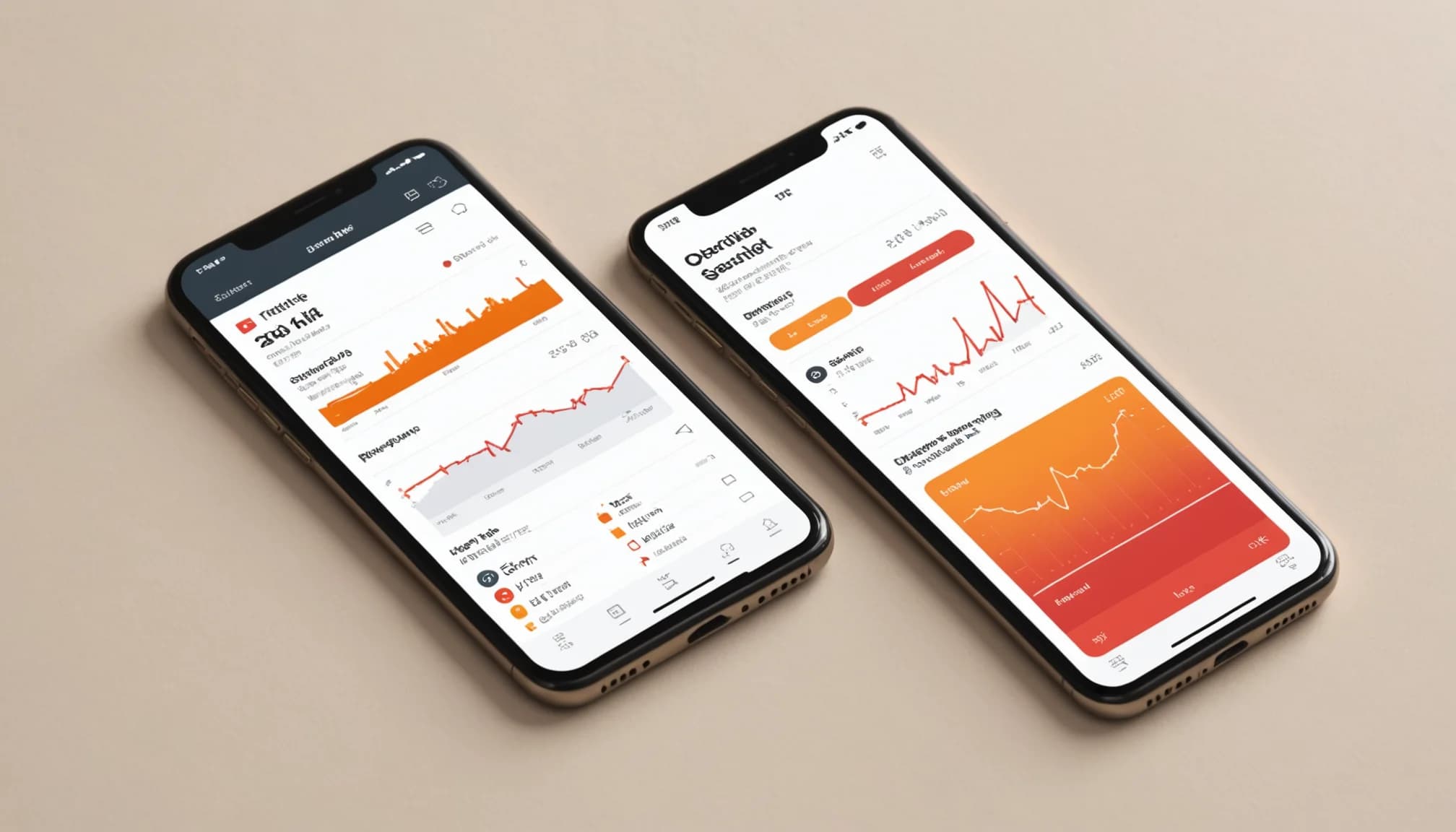
The first 30 days define the entire customer relationship. Customers who achieve their first key outcome within the first week are 90%+ more likely to renew. Yet most SaaS teams treat onboarding as a one-time checklist rather than a guided journey. Effective onboarding for retention strategies for SaaS should map to the customer's stated goal, not your feature list. If a customer signs up to 'track sales leads,' show them how to import contacts, log calls, and run a pipeline report—in that order. Reduce friction by automating setup, providing templates, and removing decision paralysis.
In-app guidance and walkthroughs accelerate time-to-value. Tools like Pendo, Appcues, or built-in tooltips can highlight the exact feature a new user needs at the moment they need it. Pair this with proactive emails from the onboarding team. A personalized email on day 1 ('Here's your custom dashboard setup'), day 3 ('See how Sarah from your industry uses features X and Y'), and day 7 ('Let's review your goals—book a 15-minute call') can double onboarding completion rates. WRRK's CRM auto-builds from email, so your onboarding team automatically captures every interaction—no manual data entry, just clean records tied to each customer.
Segment onboarding by risk profile. Enterprise customers who pay $5K+/month need a dedicated onboarding specialist and weekly check-ins. Mid-market customers ($500–$2K/month) benefit from group onboarding webinars and self-service guides. Free or freemium users should have an automated onboarding sequence that requires zero manual effort at scale. This segmentation ensures retention strategies for SaaS match customer value and expectations, not just effort.
03
How to measure and act on churn signals before it's too late
Churn rarely happens overnight. Customers usually show behavioral signals 30–60 days before they cancel: declining login frequency, feature abandonment, support tickets about pain points, or reduced seat usage. The most sophisticated SaaS teams build churn prediction models that score each customer on these signals and trigger interventions. A customer who logs in 3+ times per week but suddenly drops to once per week should get a health check call. A team that used feature X daily but stopped should be shown a new workflow or case study that proves the feature's ROI.
Net Revenue Retention (NRR) is your north star metric for long-term retention and expansion. NRR accounts for churn, downgrades, and expansion revenue. An NRR above 100% means expansion revenue outpaces churn—a sign of strong product-market fit and customer expansion potential. Tracking NRR by cohort (when customers joined), segment (company size, industry), and feature usage helps you isolate where retention is weak. A cohort that came in 18 months ago with 70% NRR signals systemic issues; a newly launched feature with 40% adoption signals missing education.
Act fast on churn alerts. When a customer hits a churn risk threshold, the best response is immediate: a personalized call from your CSM or founder, a custom training session for the struggling team member, or a feature demo that directly addresses their stated challenge. This isn't reactive support—it's proactive retention. Tools like Vitally, Totango, or built-in CRM dashboards let you flag at-risk accounts in real-time and assign actions. WRRK's AI prospecting identifies in-market intent signals; the same principle applies internally—recognize when a paying customer's engagement is drifting and intervene before they've made the decision to leave.
04
How to build expansion revenue and reduce churn through customer success
Customers who expand usage and add seats are 80%+ more likely to renew than those on static plans. Expansion revenue—upsells, add-ons, and seat growth—should be a core part of your retention strategy, not an afterthought. This means training your CS team to recognize expansion opportunities. When a customer's usage of feature X grows 40% month-over-month, they're usually ready for a higher tier or an adjacent product. When they invite external teams into your workspace, they may need more seats. When they ask about API access, they're considering deeper integration.
Proactive education reduces churn by showcasing value they're not yet using. Quarterly business reviews (QBRs) with mid-market and enterprise customers provide a structured moment to review goals, measure impact, and surface expansion opportunities. For smaller customers, in-app prompts ('Your team is nearing its user limit; upgrade to scale') or email campaigns ('5 ways your peers use this feature') drive adoption and willingness to pay. The goal is to make customers successful with what they've bought before asking them to buy more.
Customer success metrics tie directly to renewal and expansion. Track: onboarding completion rate, time-to-first-key-outcome, monthly active users, feature adoption breadth, support resolution time, and NPS. Teams with a dedicated CSM for high-value accounts see 40%+ improvement in NRR. For mid-market, asynchronous models—automated emails, recorded webinars, and in-app guides—scale CS across 50+ customers per CSM. Invest in the right model for your segment, and align CS incentives to NRR and renewal rate, not just ARR.
05
How to use data and workflows to automate retention at scale
Manual retention workflows don't scale. As you grow beyond 100 customers, spreadsheets and ad-hoc email campaigns fail. The best customer retention strategies for SaaS use automation to detect signals, trigger interventions, and track outcomes. A workflow might look like: (1) Customer usage drops below threshold → (2) Send automated prompt in-app + email → (3) If no response in 7 days, trigger CSM call → (4) CSM outcome logged, next action scheduled. This ensures no at-risk customer falls through the cracks, and every action is tracked and iterated on.
A unified CRM tied to usage data is essential. Your CRM should ingest data from your product (logins, feature usage, seat count), your billing system (plan, renewal date, invoice history), and your support system (tickets, NPS responses). Native integrations or APIs should feed this data automatically so your team sees a 360-degree view of each customer. When you log into your CRM, you should instantly see: 'High-value customer, onboarded 6 months ago, NPS 8, usage down 15% last month, 2 open support tickets, renewal in 60 days.' That visibility enables smart, timely decisions.
Workflows should adapt to customer segment and maturity. New customers get onboarding sequences; existing customers get check-in cadences; at-risk customers get intervention sequences; happy customers get expansion prompts. A platform that combines CRM, automation, and communication channels—email, WhatsApp, in-app messages—lets CS teams orchestrate these workflows without context-switching. WRRK integrates CRM with native WhatsApp and email, so you can automate multi-channel outreach and log every interaction back to a unified record. At $14.99/person/month, it replaces 13+ tools, cutting complexity and keeping your team focused on what matters: keeping customers happy and expanding their usage.
Key Takeaway
Customer retention strategies for SaaS succeed when they combine early engagement, continuous measurement, proactive intervention, and expansion focus. The companies winning on retention don't treat it as a cost center or afterthought—they build it into product development, invest in CS teams, and align company incentives to NRR and renewal metrics. Start by mapping your churn profile, implementing churn prediction, and automating your onboarding workflow. Then layer in proactive success check-ins, feature adoption campaigns, and QBR programs. Each step compounds: better onboarding reduces early churn; better feature adoption reduces mid-life churn; better success engagement drives expansion and reduces late-cycle churn. The result is a flywheel where retained customers become expansion customers, and expansion customers become advocates. For teams coordinating this work across CRM, email, SMS, and WhatsApp, a unified platform eliminates tool sprawl and ensures retention insights are shared across sales, CS, and product. That's where customer retention strategies for SaaS truly take root.
Frequently Asked Questions
What is a good customer retention rate for SaaS?
A good annual retention rate for SaaS is 80%–90% or higher; monthly churn should be below 5%. Rates vary by segment: enterprise SaaS typically retains 90%+ annually, mid-market 75–85%, and freemium/SMB 50–70%. Net Revenue Retention (NRR) above 100% signals healthy retention plus expansion.
How long should a SaaS onboarding take?
Effective onboarding should get customers to their first key outcome within 7–14 days and reduce time-to-value to under 3 days. The goal is not to teach every feature, but to let customers experience immediate value tied to their stated goal, which dramatically improves retention.
What metrics predict SaaS customer churn?
Key churn predictors include declining login frequency, feature abandonment, support tickets about pain points, reduced seat usage, and NPS below 6. Combining these signals into a churn prediction score lets you identify at-risk customers 30–60 days before they cancel.
What is Net Revenue Retention and why does it matter?
Net Revenue Retention (NRR) measures the percentage of revenue retained from existing customers, accounting for churn, downgrades, and expansion. NRR above 100% means expansion revenue outpaces churn and is a leading indicator of long-term SaaS growth and profitability.