Chatbot vs Live Chat: Which Is Better for Your Business?
Deciding between chatbot and live chat? Each has distinct strengths. Discover which fits your business model, staffing reality, and customer expectations.
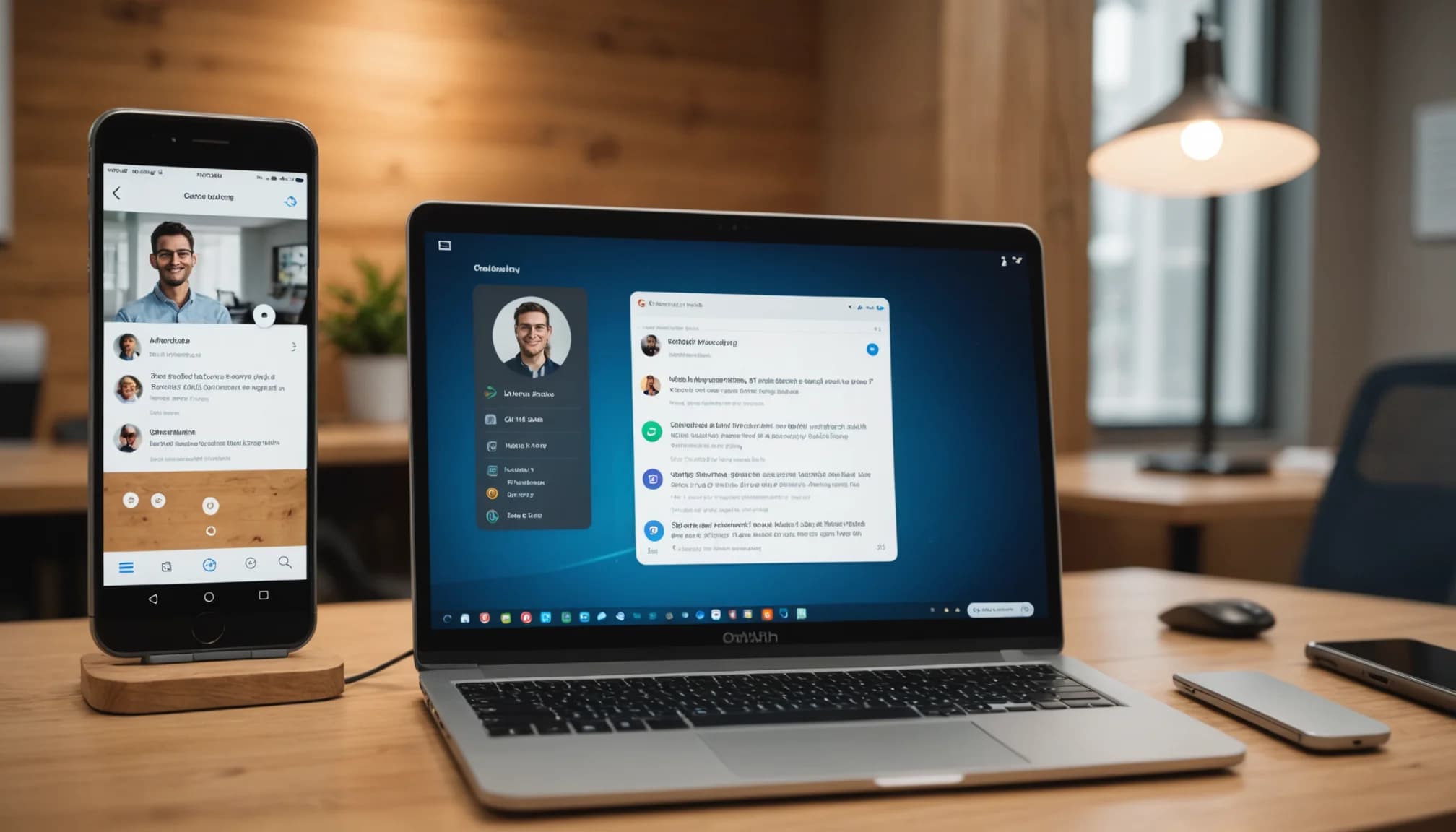
A chatbot is an AI or rule-based system that responds to customer inquiries without human intervention, while live chat connects visitors directly to a support agent in real time. Most businesses today don't ask "should we choose one?" — they ask which tool solves their immediate problem. The tension is real: chatbots never sleep and cost less per interaction, but live chat builds trust and handles complex issues. The answer depends entirely on your volume, budget, team size, and customer tolerance for automation. This guide walks through the genuine trade-offs so you can make a decision backed by data, not hype.
01
What are the key differences between chatbot and live chat?

Chatbots and live chat operate on fundamentally different models. Chatbots are always-on systems that use pre-built responses, decision trees, or AI to interpret and reply to customer messages without a human in the loop. They're deployed on websites, WhatsApp, Instagram, Facebook Messenger, and other channels. Live chat, by contrast, routes a customer's message directly to an available support agent who reads the context and responds in their own words—typically within seconds or minutes. Modern live chat software includes features like canned responses, typing indicators, and conversation history, but the human is always the decision-maker.
The operational difference has immediate ripple effects. Chatbots can handle unlimited concurrent conversations; a live chat agent can realistically manage 3–6 simultaneous chats before quality drops. Chatbots respond in milliseconds; live chat response time depends on agent availability and queue length. Chatbots cost roughly the same to serve your 100th customer as your first; live chat requires payroll, training, and scheduling. According to Shopify's 2026 AI Chatbot Customer Service guide, businesses using chatbots for first-contact resolution report 40% faster resolution times for simple queries, but those queries are often routing, FAQ, or password-reset issues—not complex complaints.
A third dimension is learning and context. Rule-based chatbots answer only what they've been programmed to handle; AI-powered chatbots (like those in WRRK or other unified platforms) can learn from conversation history and auto-populate customer data from CRM fields, reducing the friction of repetitive questions. Live chat agents have access to the same CRM data but bring human judgment, empathy, and the ability to bend rules for a loyal customer. Neither is objectively 'better'—they solve different problems at different scales.
02
Chatbot vs live chat: direct capability comparison

Here's how the two stack up across the dimensions that matter most:
**Availability & Response Time:** Chatbots operate 24/7 with zero latency; live chat is limited to agent hours and queue time (typically 1–5 minutes during peak times). **Issue Complexity:** Chatbots excel at FAQs, order status, booking, and password resets; live chat handles billing disputes, complaints, and nuanced requests. **Cost Per Interaction:** Chatbots cost $0.01–0.05 per interaction at scale; live chat costs $2–8 per interaction when you factor in salary, benefits, and software ($50–200/month per agent). **Customer Satisfaction:** According to Unite.AI's 2026 survey of AI chatbots for business, satisfaction with chatbots averages 72% for first-contact resolution but drops to 45% when escalation is needed; live chat satisfaction averages 85% but frustration spikes if wait times exceed 2 minutes. **Personalization:** AI chatbots can pull customer history and recommend products; live chat agents build rapport and remember repeat customers by name. **Scalability:** Chatbots scale infinitely for the cost of compute; live chat requires linear hiring.
For small and mid-size businesses, the honest trade-off is this: **Chatbots do X; Live Chat does Y.** Chatbots handle volume and off-hours; live chat handles emotion and exceptions. WRRK's approach is to include both—native AI chatbots on WhatsApp and Instagram, plus unified inbox for live agents to step in. This hybrid model lets you route simple queries to the bot (which learns from your CRM and email history), then escalate complex ones to a human without requiring your customer to re-explain their issue. At $14.99/person/month, you get the bot-first efficiency without sacrificing the human touch when it matters.
03
When is a chatbot the better choice?
Chatbots are the right call when your business has high-volume, repeatable interactions and a team too small to staff 24/7 live chat. E-commerce businesses asking 'What's my order status?' a thousand times a day see immediate ROI with a chatbot. SaaS companies fielding password resets, billing questions, and API documentation lookups benefit from AI chatbots that can pull from your knowledge base in real time. Appointment-based businesses—dental offices, salons, consultancies—use chatbots to automate booking confirmations and reminders, freeing staff to focus on delivery.
The strongest case for chatbots is geographic reach or time-zone coverage. If you serve customers across three continents, live chat requires either a night shift or no coverage at 2 a.m. in Singapore. A chatbot answers instantly in every language you configure. Similarly, if your business operates on a minimal budget and manual hiring would add significant overhead, a smart chatbot (especially one integrated with your CRM, like WRRK) reduces the need for a large support team by handling first-contact resolution for 60–70% of inbound queries.
Recent adoption trends support this: young people increasingly turn to chatbots for initial troubleshooting—not just from brands but from support communities—according to reporting in 2026. This signals that chatbots are no longer a 'nice-to-have'; they're becoming a standard expectation for availability and speed. If your business is understaffed or operates irregular hours, a chatbot powered by real customer data (not generic templates) is a genuine competitive advantage.
04
When is live chat the better choice?
Live chat wins when your business sells high-ticket items, complex services, or relies on relationship-building. A financial advisor, home renovation company, or enterprise SaaS sales team needs the judgment, negotiation skill, and emotional intelligence a human brings. Live chat also performs better when your customer base expects human support as a mark of legitimacy—luxury brands, law firms, and healthcare providers lean heavily on live chat to build trust and comply with regulations.
Live chat is also the better choice when your queries involve subjective judgment or exceptions. A customer wants a refund outside the return window; a product isn't working and the fix requires troubleshooting a unique setup; a complaint escalates and needs de-escalation. These situations demand a human who can empathize, make trade-offs, and sometimes say 'yes' when the policy says 'no.' G2's 2026 survey of live chat software found that businesses using live chat to handle exceptions and complaints saw a 23% increase in customer lifetime value compared to those relying solely on routing to email or chatbots.
A third factor is customer volume and team size. If you have fewer than 100 daily support inquiries and a team of 2–3, live chat is often simpler than building and maintaining a chatbot; your agents can handle the load with one tool instead of orchestrating chatbot + fallback system. Finally, if your product or service is new, complex, or poorly documented, live chat lets agents share screens, videos, or detailed explanations on the fly—something a chatbot (even an AI one) struggles with. The upside of live chat is immediacy and depth; the downside is it doesn't scale and costs per interaction climb as volume grows.
05
Is a hybrid chatbot + live chat approach right for your business?
The smartest approach for most small and mid-size businesses is hybrid: chatbots handle the first layer (FAQ, triage, basic troubleshooting), and live agents handle escalations. This model reduces support costs by 30–50%, speeds up first-response time to under 1 minute for routine inquiries, and preserves human touch for issues that need it. The key is seamless handoff—if a chatbot can't solve a problem, it should transfer the conversation to a live agent with full context (customer history, what the bot already tried, sentiment), so the customer doesn't repeat themselves.
WRRK is built for this hybrid workflow. The platform includes AI chatbots natively on WhatsApp Personal and Business APIs, plus Instagram, so your first-contact resolution happens at the speed of chat. When a customer asks something the bot can't handle, the unified inbox escalates to a live agent, and the CRM auto-populates with the customer's email history, intent, and all prior interactions—no manual context switching. The same $14.99/person/month covers the bot, the CRM, the unified inbox for your team, and AI prospecting (which finds in-market leads across Reddit, LinkedIn, X, Quora, Facebook, Instagram, TikTok, and YouTube in real time). This eliminates the need to cobble together separate tools for chat, CRM, and outbound prospecting.
Another reason to go hybrid: modern AI platforms learn. If a chatbot consistently fails to resolve a type of query, it flags that pattern and routes similar queries straight to a human next time. Over time, your bot improves at triage and your team sees fewer repeat interruptions. Companies running this model report 15–20% quarterly improvements in first-contact resolution rates because the system learns what it does well and what it doesn't.
Key Takeaway
Chatbot vs live chat isn't a binary choice anymore—it's about which tool solves your immediate bottleneck. If you're drowning in repetitive questions at 2 a.m., a chatbot is the answer. If your customers are spending 10 minutes on hold or leaving without a response, live chat (with real people) is the answer. If you're a growing team trying to serve more customers without proportionally growing headcount, a hybrid model is the answer. The best approach integrates both seamlessly: bots for speed and scale, humans for judgment and trust. WRRK combines AI chatbots (WhatsApp + Instagram native), live chat triage via unified inbox, and auto-populated CRM context, all in one platform at $14.99/person/month—eliminating the context-switching and integration headaches of piecing together multiple tools. Whether you're starting with chatbots and adding live agents later, or vice versa, the key is starting somewhere and letting data (response times, satisfaction, resolution rates) guide your next step.
Frequently Asked Questions
Do chatbots or live chat provide better customer satisfaction?
Live chat typically achieves 85% satisfaction for human interaction, while chatbots average 72% for first-contact resolution but drop to 45% when escalation is required. The best result: hybrid systems where bots handle simple queries instantly and escalate to live agents only when needed, keeping satisfaction high while reducing response times.
How much does a chatbot cost compared to live chat?
Chatbots typically cost $0.01–0.05 per interaction at scale and $50–300/month in software; live chat costs $2–8 per interaction when factoring in agent salary, benefits, and software ($50–200/month per agent). For high-volume, simple queries, chatbots are 10–100x cheaper; for complex issues, live chat has a lower cost-per-resolution.
Can AI chatbots replace live chat entirely?
AI chatbots can replace live chat for first-contact resolution (FAQs, order status, booking), handling 60–70% of inbound queries efficiently. However, they cannot replicate human judgment for complaints, exceptions, or relationship-building. Most successful businesses use both: chatbots for triage and availability, live chat for complex or emotional issues.
What's the best tool for a small business with limited budget?
A hybrid chatbot + live chat platform like WRRK ($14.99/person/month, includes AI chatbots, CRM, and unified inbox) or dedicated chatbot software for high-volume businesses is more cost-effective than hiring a full-time support agent. Start with a chatbot for after-hours and FAQ handling, then add live chat when volume justifies it.