Unified Inbox: What It Actually Means (And Why Yours Probably Isn't)
Most tools claiming 'unified inbox' just stack your email, chat, and social in separate tabs. A real unified inbox shows every message with full context about who the person is, what deal they're in, and what you should do next.
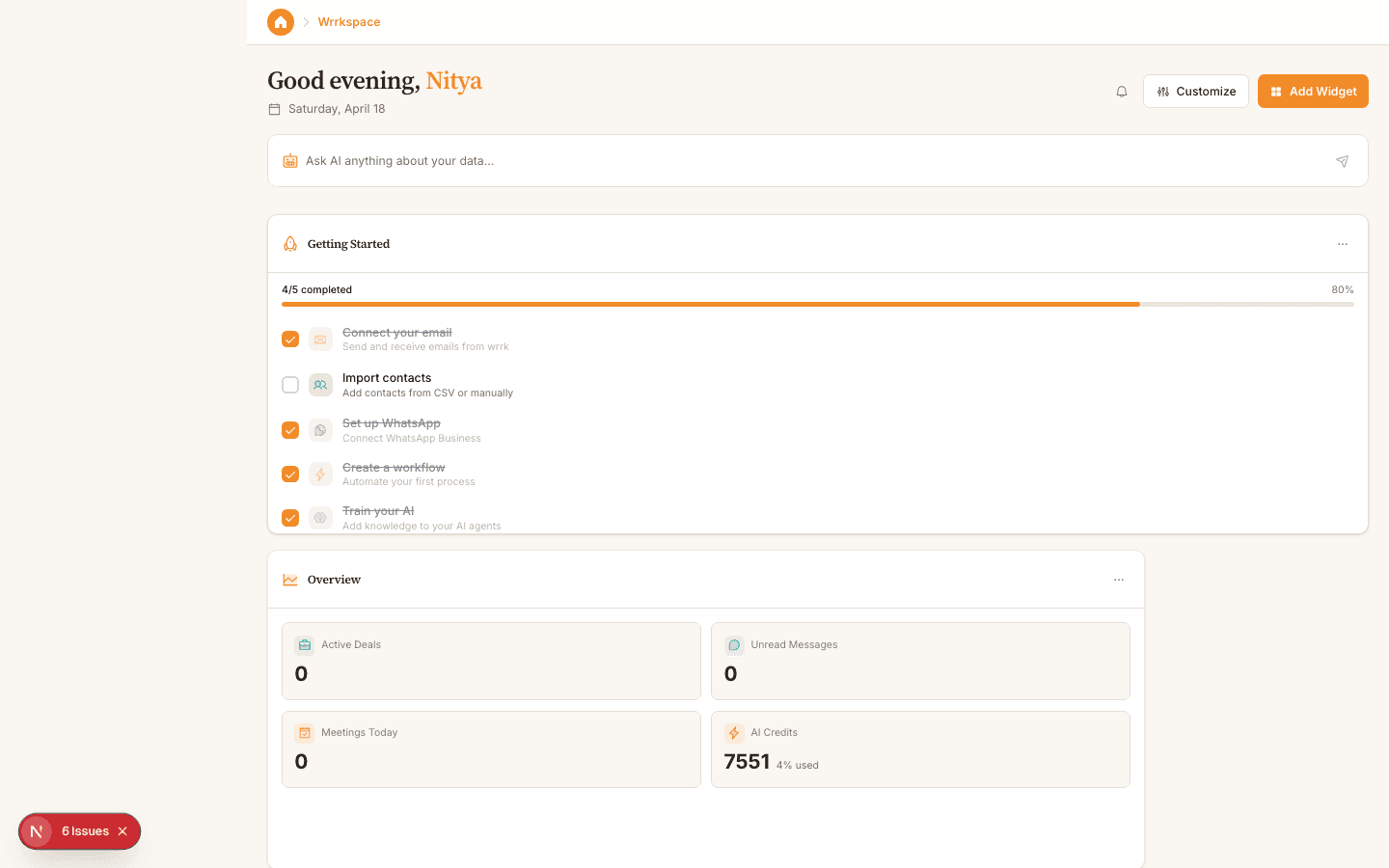
Every business communication tool now claims to offer a 'unified inbox.' Freshdesk has one. Intercom has one. HubSpot has one. Front has one. But open most of them and you'll find the same pattern: separate tabs for email, chat, social, and phone — each with its own interface, its own search, and its own contact records. That's not unified. That's tabbed.
01
What 'unified' actually means
A truly unified inbox does one thing that tabbed inboxes don't: it shows you every message from every channel in a single stream, with full context about who the sender is. Not 'here's an email from sarah@acme.com' but 'here's an email from Sarah Chen, VP Sales at Acme Corp, who has an open deal worth $15K in proposal stage, sent you 3 WhatsApp messages last week, has a support ticket open about billing, and hasn't heard from you in 12 days.'
That context changes everything. Without it, you reply to an email as if it's an isolated event. With it, you reply knowing the full history of the relationship. You know which channel they prefer. You know what they've asked about before. You know whether to be proactive about the billing issue before they bring it up again.
The difference between a tabbed inbox and a unified inbox is the difference between looking at a person's latest message and understanding who they are across every interaction you've ever had with them.
02
Why most 'unified inboxes' fail
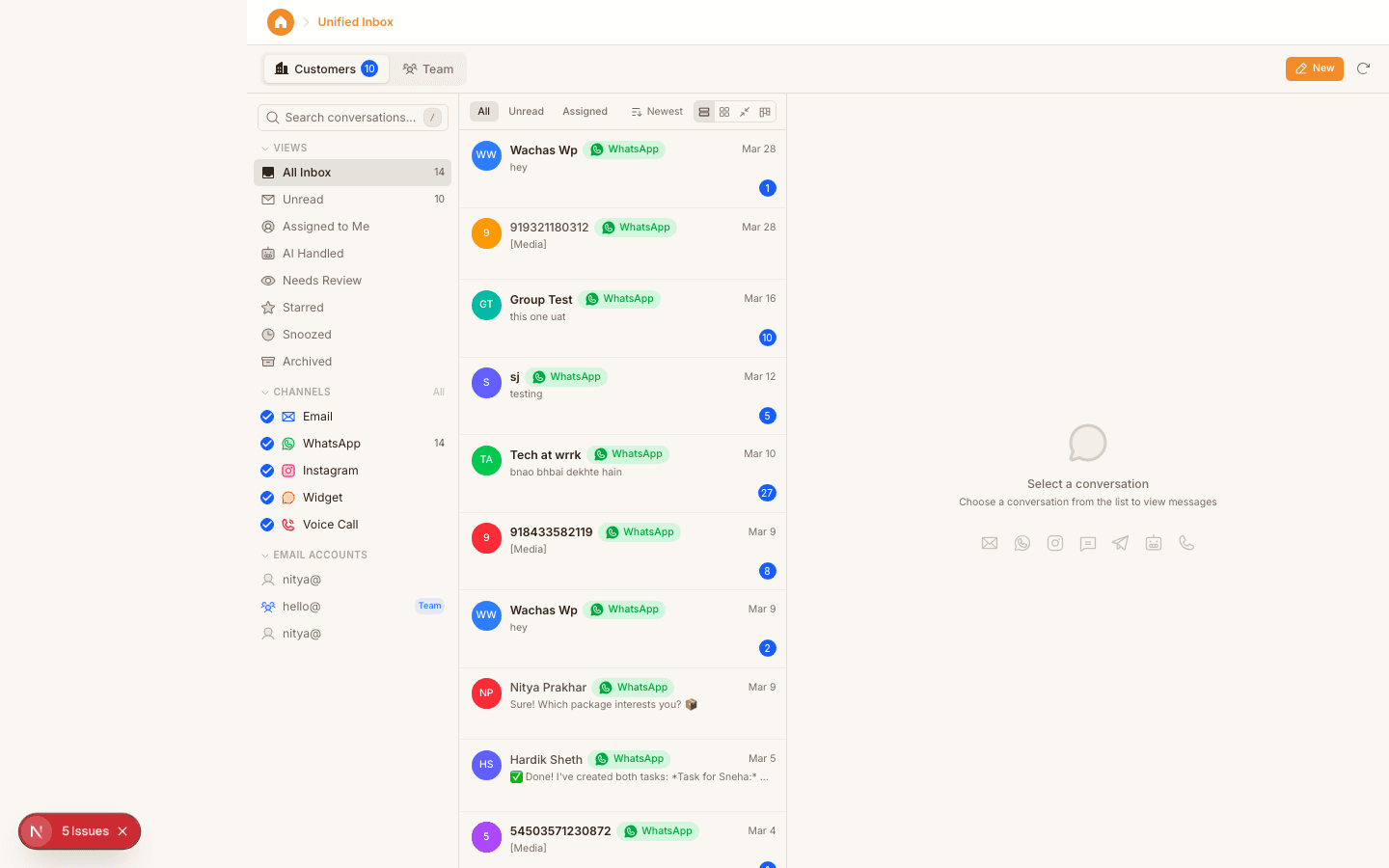
Most unified inbox implementations fail for one reason: the data isn't actually unified. The email system has one contact database. The chat system has another. The CRM has a third. When a customer emails you, the system shows the email — but it doesn't automatically pull up their WhatsApp history, their support tickets, their deal status, or their last phone call.
This happens because most platforms are built as separate modules that were bolted together after the fact. Email was added in year one, chat in year two, CRM in year three, WhatsApp in year four. Each module has its own database, its own contact records, its own search index. The 'unified inbox' is really just a UI layer on top of fragmented data.
True unification requires a single contact record that collects interactions from every channel. When someone emails you, their WhatsApp messages appear in the same timeline. When they call, the transcript is attached to the same contact. When they submit a form, it's the same contact. One person, one record, every interaction.
03
What changes when the inbox is actually unified
When every channel feeds into a single contact timeline, three things happen. First, response quality goes up. Reps stop asking questions that were already answered on a different channel. They reference previous conversations naturally. Customers feel recognized instead of repeating themselves.
Second, follow-ups become automatic. The system knows Sarah messaged on WhatsApp 5 days ago and you haven't replied. It knows that Mike's last email had a negative sentiment and his deal is stuck in negotiation. It surfaces these naturally — not as a to-do list you have to manage, but as context that appears when you need it.
Third, channel preference becomes visible. Some customers prefer WhatsApp. Some prefer email. Some start on chat and move to email. When you see the full interaction history, you know which channel to use next — not because you guessed, but because the data shows you.
Key Takeaway
The term 'unified inbox' has been diluted by tools that use it to describe tabbed interfaces with separate data stores. A real unified inbox is built on a single contact record that collects every interaction from every channel into one timeline. It doesn't just show you messages — it shows you relationships. If your unified inbox still requires you to switch tabs to see someone's full history, it's not unified. It's just organized fragmentation.