The Zero-Setup CRM: Why the Best CRM Is One You Never Have to Fill In
CRM adoption fails because of data entry. What if your CRM populated itself from your existing email, WhatsApp, and call history — automatically, in seconds, with no manual input at all?
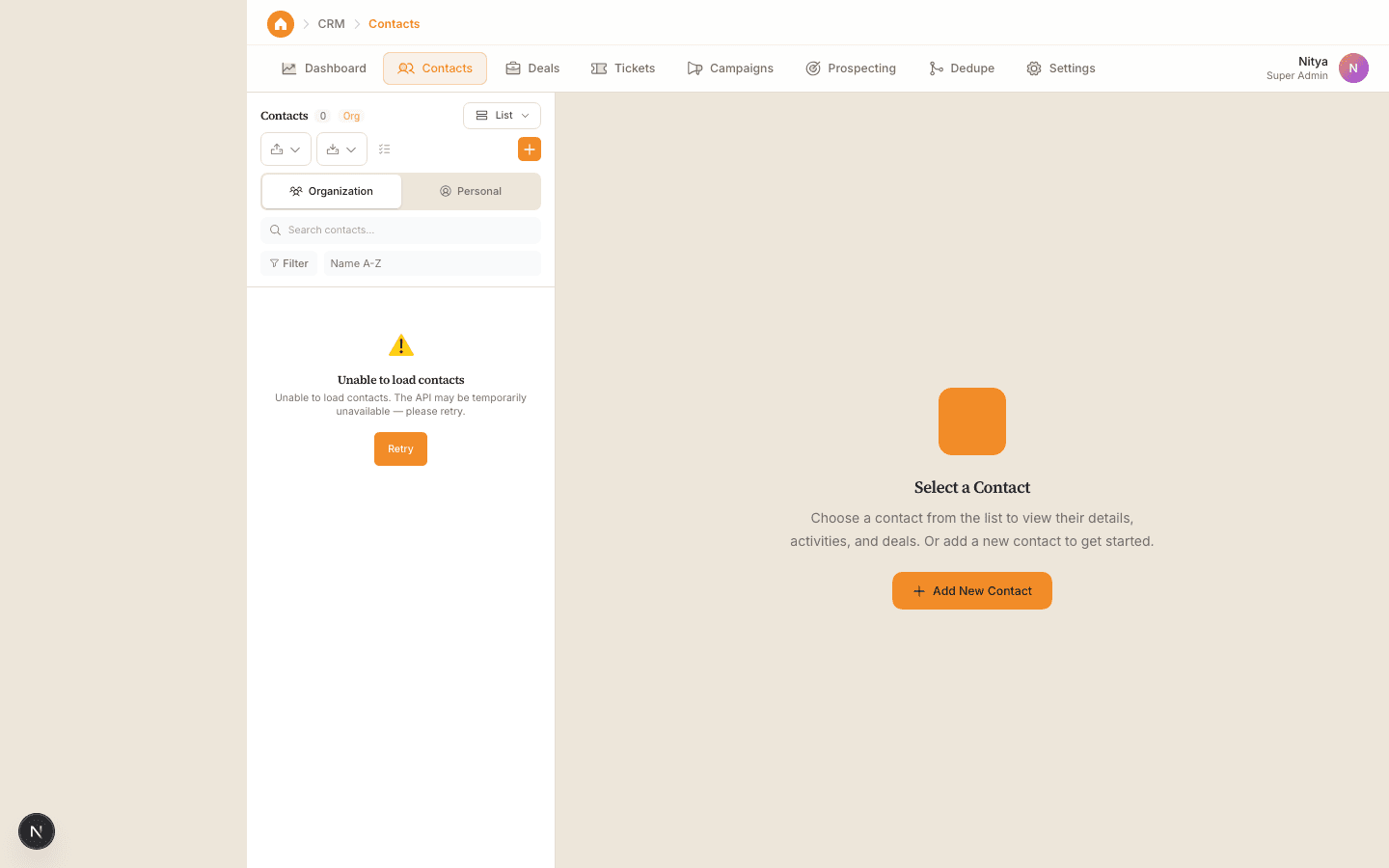
Here's the dirty secret of the CRM industry: most CRMs fail. Not because the software is bad, but because nobody uses them properly. Salesforce's own data shows that 43% of CRM users use less than half the features they're paying for. A Capterra survey found that 22% of salespeople don't even know what a CRM is. And the #1 reason for CRM failure, cited in study after study? Manual data entry. People hate it, they skip it, and the CRM becomes a graveyard of incomplete records.
01
The data entry death spiral
A Nucleus Research study found that sales reps spend 17% of their time on data entry — that's almost a full day per week not selling. HubSpot's State of Sales report confirms it: the average rep spends 4 hours per week manually logging activities in their CRM. Four hours of typing names, updating deal stages, and copy-pasting email addresses instead of closing deals.
And when they skip the data entry (which they inevitably do), the CRM becomes unreliable. Managers can't trust the pipeline numbers. Forecasts are wrong. Follow-ups get missed because the CRM doesn't know about conversations that happened outside of it. The tool that was supposed to organize your sales process becomes another source of incomplete information.
This is the data entry death spiral: the CRM is only useful when it has accurate data, but getting accurate data requires manual work that salespeople won't consistently do. Every CRM in history has run into this problem. None of them have solved it by making data entry easier. The solution isn't better forms — it's no forms at all.
02
What if the CRM filled itself?
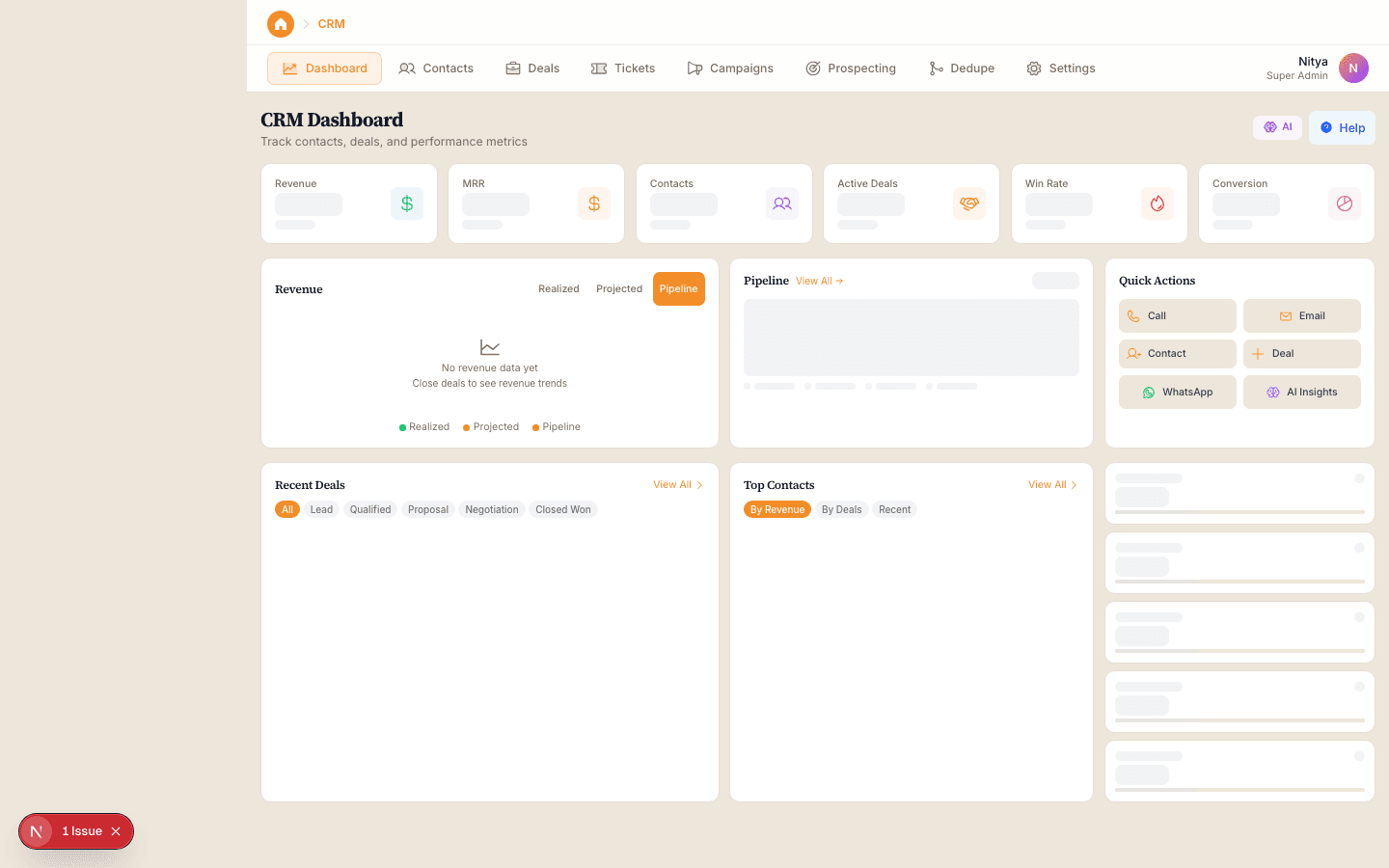
Your email already contains your CRM. Every person you've emailed is a contact. Every thread about pricing or proposals is a deal. Every unanswered email from three weeks ago is a follow-up opportunity. The data is sitting right there — in your inbox, in your WhatsApp, in your call logs. It just needs to be extracted and organized.
Modern AI can do exactly that. Connect your email account, and within 90 seconds, the system can scan your last 90 days of conversations, extract every unique contact with their name and company, detect threads that look like sales opportunities, score each contact by engagement frequency, and draft follow-up messages for leads that have gone cold. No typing. No forms. No data entry at all.
This isn't a better CRM. It's the end of CRM as a data-entry chore and the beginning of CRM as an intelligence layer that works for you automatically.
03
From empty dashboard to full pipeline in 90 seconds
The first-time experience matters enormously. When a sales rep opens HubSpot for the first time, they see an empty dashboard and a button that says 'Create your first contact.' That's the moment most CRM adoptions die — the gap between 'I signed up' and 'I'm getting value' is filled with hours of manual setup.
Now imagine a different first experience: you connect your Gmail or Outlook, and 90 seconds later you see 156 contacts, 8 active deals, a $52K pipeline, and 12 AI-drafted follow-ups ready to send with one click. You didn't create any of it. The system built it from conversations you already had.
That's the difference between a tool that requires work to become useful and a tool that's useful from the first minute. The CRM that wins isn't the one with the most features — it's the one with the shortest time to value.
Key Takeaway
The CRM industry has been solving the wrong problem. They've been making data entry faster, easier, more mobile-friendly. But the real solution is eliminating it entirely. When your CRM builds itself from your existing conversations — email, WhatsApp, calls — then every salesperson uses it, every interaction is tracked, and every follow-up is surfaced automatically. That's not a CRM upgrade. That's a category shift.